First Post!
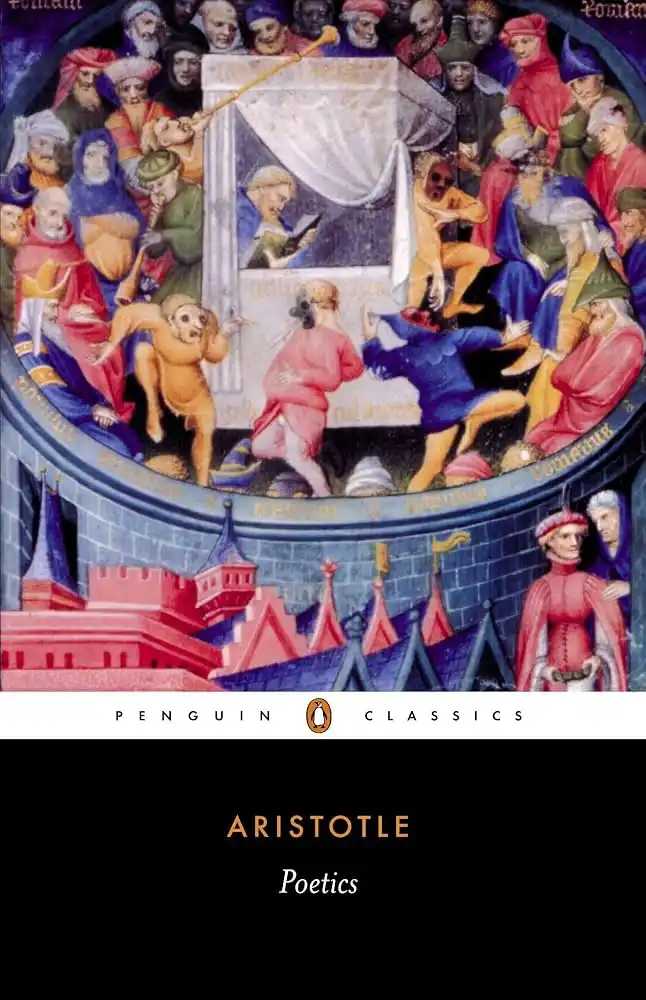
Malcolm Heath's intro to his 1996 translation of Aristotle's Poetics was perhaps my first serious foray into understanding story and drama. Tackling the surprisingly complex systems of "good" plots rather simply and elegantly, Heath had provided a brilliant contribution for Western thought.
Of course, the heart of this thought lies with Aristotle, and his observations have proven to be not only fundamental for understanding our fiction and poetry, but for even understanding our societal dreams and desires.
While Aristotle introduced to the world many important core terms—catharsis, ethos, mimesis, mythos, opsis, and peripeteia among them—perhaps the most overlooked in modern society is the concept of hamartia.
The Merriam-Webster dictionary defines 'hamartia' as 'tragic flaw.' Aristotle and Heath make clear that it isn't equivalent to sin. It is a lack of judgement, not poor judgement.
You try, and you lose, and it is your fault. That has been the basis of tragedy for over 1000 years. The reason the hero fails is closer to why a football team might lose than a story about a man forced to choose between an Angel and a Demon. It is not a moral assessment, not in the way our often black-and-white world sees it, anyway. Hamartia comes from the Greek verb hamartanein, meaning "to miss the mark." In my view (and a view which I believe Heath may agree with), catharsis is not possible without hamartia.
Catharsis—the fear and pity we might feel while watching a tragedy—is only possible through observation of hamartia. We fear the tragedy since it may have easily been us who made the fatal flaw. We feel pity, as the fallen hero is no worse than any of us.
Life isn't fair. Heroes, despite their best, most moral, most valiant efforts, fail daily. Catharsis is often translated as meaning 'purification' or 'cleansing.' It is a beauty of fiction that we are able to concoct these worlds, these plots, these characters, and provide us with tools that enable us to learn and grow, without turning the world black-and-white.
(Writing in progress)